Called To The Post

~ Covering racing, horse photos, and my travels from time to time (all content copyright reserved)

Called To The Post

Category Archives: Uncategorized

An April Walk through the Horse Park

03 Sunday May 2020

Posted by Sarah Troxell in Uncategorized

≈ Leave a comment

Go for Gin the week he turned 29 – the oldest living Derby winner, and looking great!
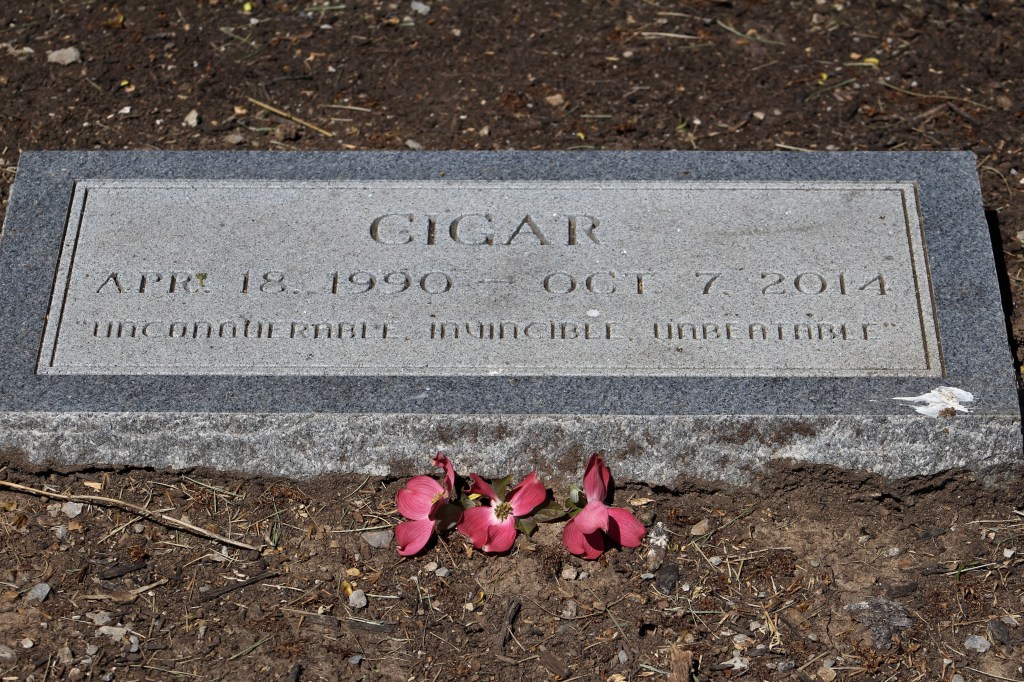
Flowers for Cigar, who would have turned thirty the same day Go for Gin turned 29 (actually, not just officially). Had to leave him flowers!
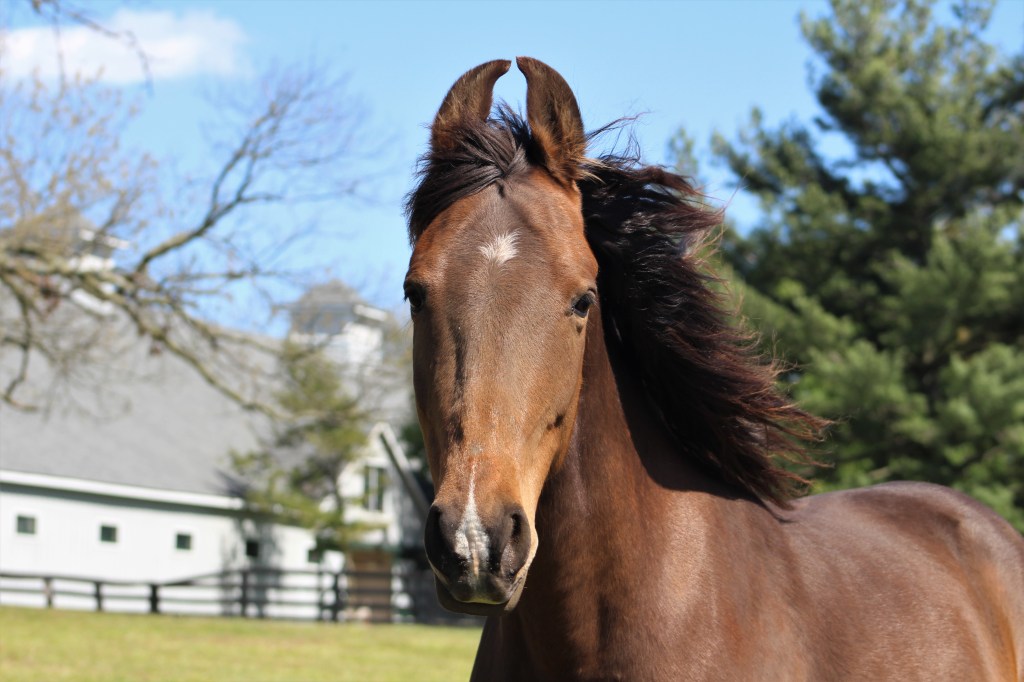
A Marwari horse residing near the Horse Park’s Big Barn. Loved to see how his fine breeding was evident in his face, somewhat reminding me of Thoroughbred characteristics, unique ears aside! And while this is a racing blog primarily, wanted to include him since horse interacting have been scarce this year and it is still good to have horse photos on here! And I am grateful the Horse Park still opens their gates to to visitors, which I didn’t expect, as long as all proper health guidelines are followed, and specific park rules are observed.

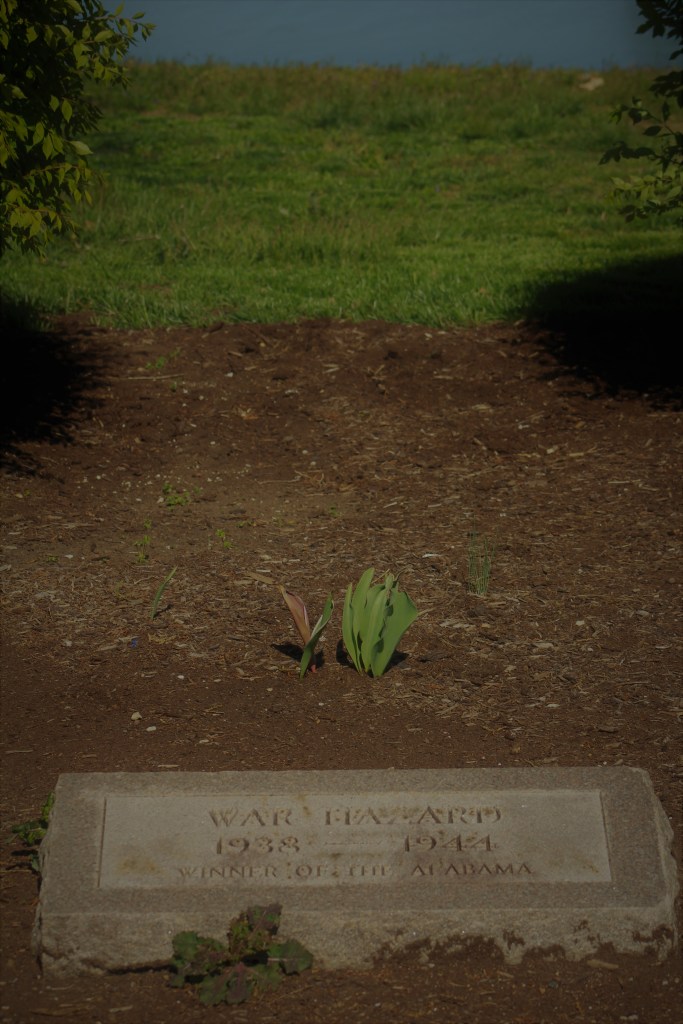
War Hazard’s peaceful resting place near her sire Man o’War. A plaque nearby revealed her to have been quite close in looks to Man o’ War.


The Legacies of Bull Dog and Aristides, and the Land Where They Lived

03 Sunday May 2020

Posted by Sarah Troxell in Uncategorized

≈ Leave a comment

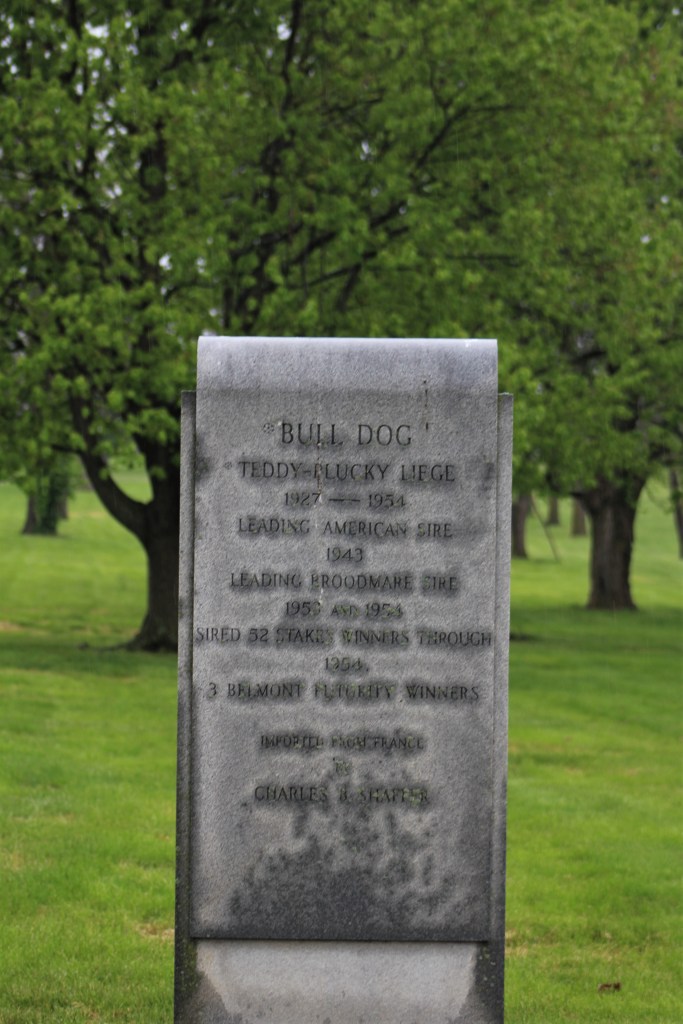
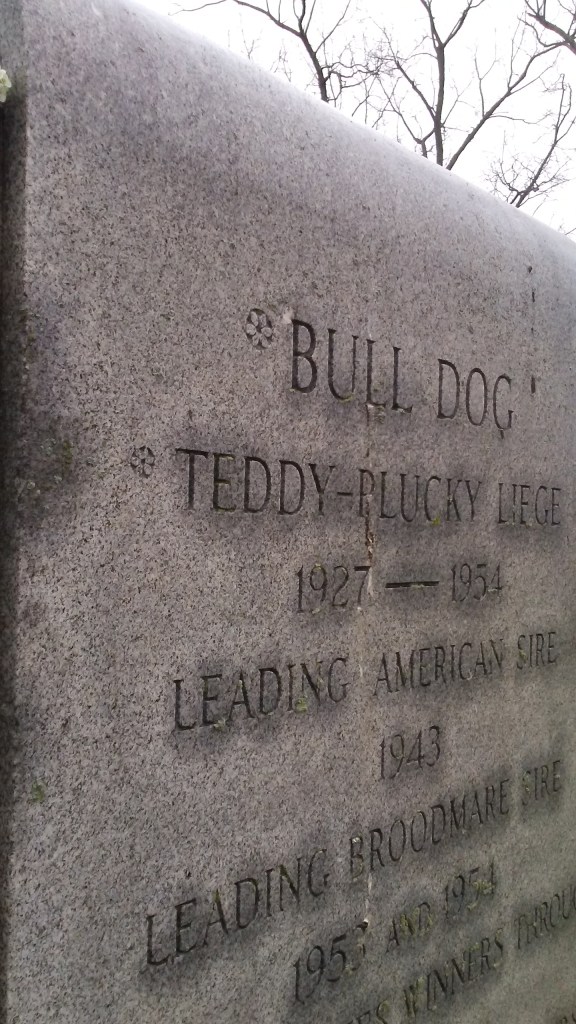
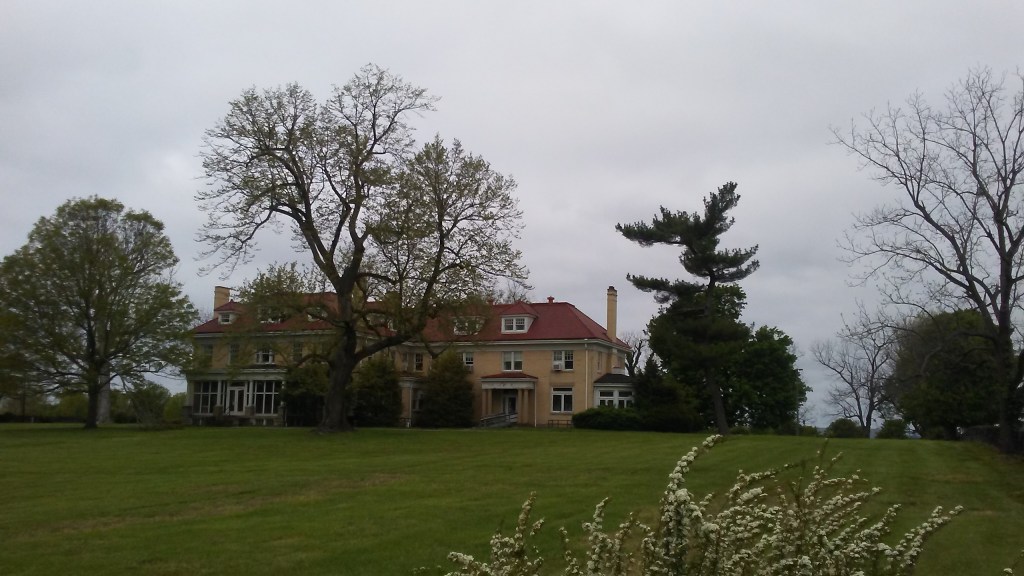
Bull Dog’s gravestone stands in a pastoral setting on the ground of Carnahan House. This house was once the grand residence in the center of Coldstream Farm, which grew as its success did by acquiring land of other nearby farms, including McGrathiana Farm, where the winner of the first Kentucky Derby, Aristides, was bred.


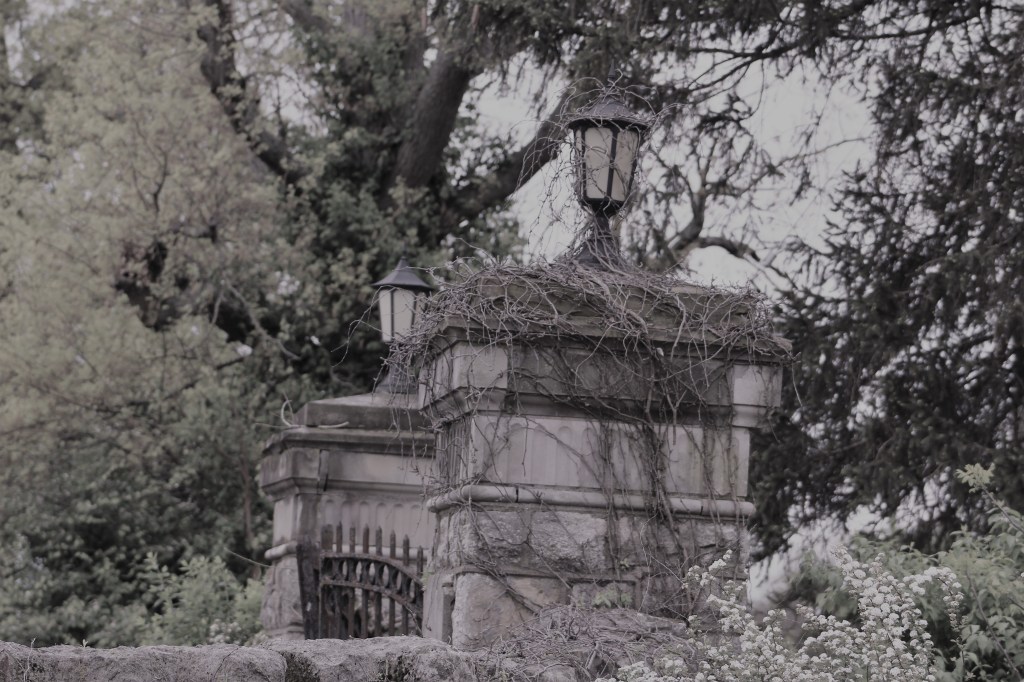
A gate near Bull Dog’s gravestone

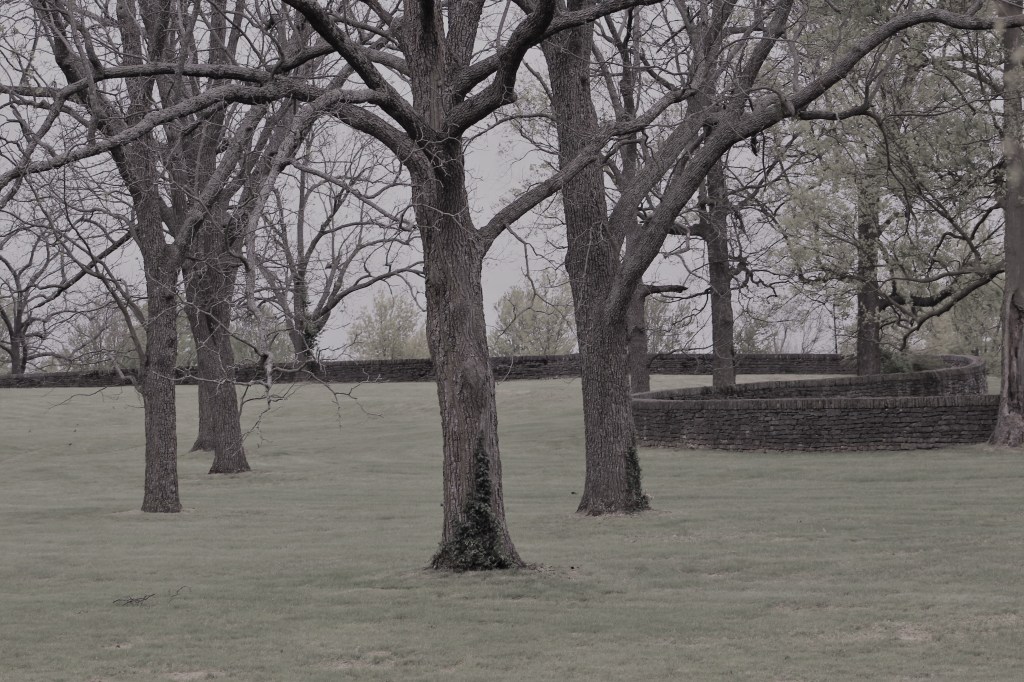
Grounds of Carnahan House
Bull Dog’s gravestone circled, nestled among peaceful surroundings at Carnahan House

McGrathiana was purchased later by C.B. Shaffer, along with a nearby farm called Coldstream. Shaffer gave the name Coldstream to all the holdings that made up the farm he purchased. He was also the owner of the farm when the house that would later be called Carnahan House, after the University of Kentucky purchased the property, was built.

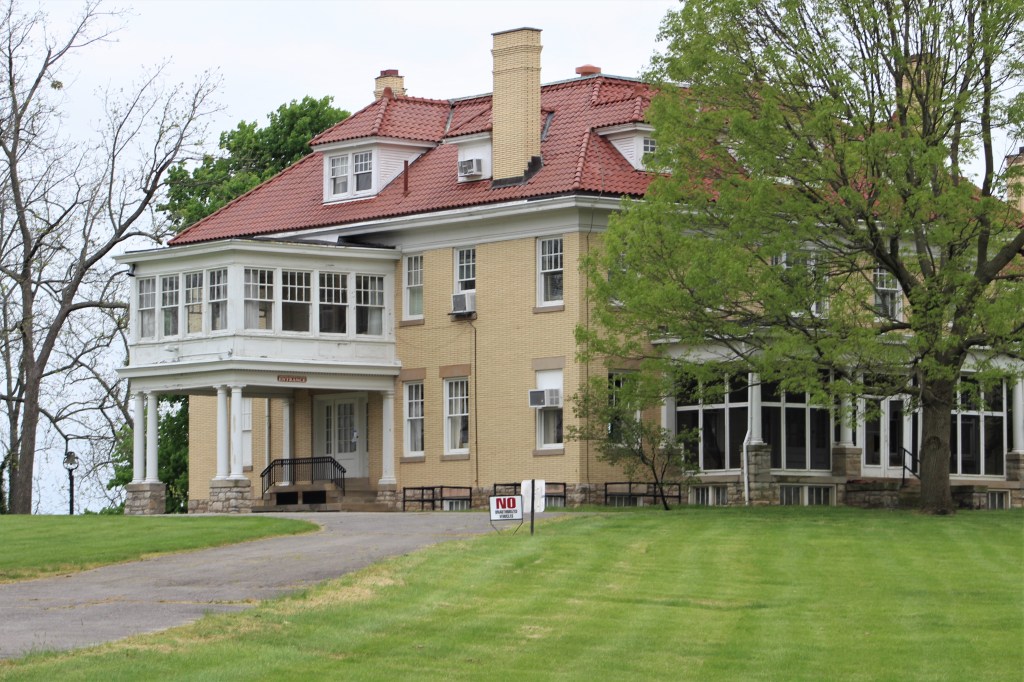
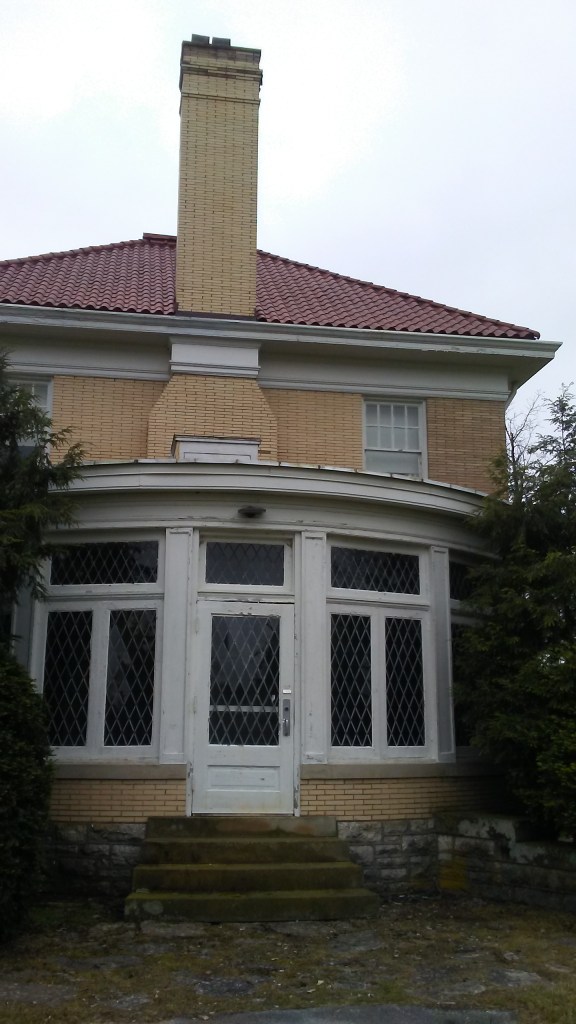
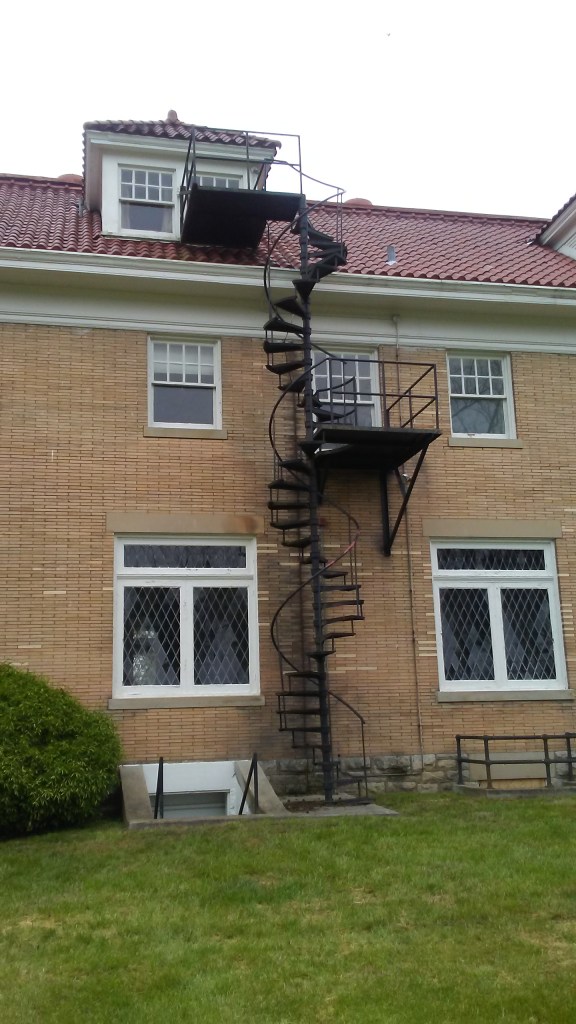
Views of Carnahan House, including one from the interior, showing what a grand home it once was. Even the fact that it has three chimneys stood out.


It is likely Bull Dog’s stone was moved to its present location but not his remains. Still, it was awe-inspiring to stand before this homage to him and reflect upon what he contributed to the Thoroughbred breed.


According to Avalyn Hunter’s American Classic Pedigrees website, Bull Dog had a strong opportunity at stud due to his full brother Sir Gallahad III’s success as a sire. Of course, Bull Dog sired the incomparable Bull Lea, and that alone would be enough to ensure his name lived on. He earned standings in the top tier of the sire rankings numerous times, and also was a top broodmare sire later in his stud career.

Interestingly, Bull Lea became one of only four stallions to sire three Kentucky Derby winners, with his sire’s full brother Sir Gallahad III being one of the others.

In addition to Aristides, over the years and varying ownership, other top horses came from this land surrounding the last remnant, the grand home referenced above, of when it was devoted to raising horses. Hindoo, Jet Pilot, Myrtle Charm, and of course Bull Dog were some of the most notable horses that were bred and raised on the property, whether it was called McGrathiana, Coldstream, or Maine Chance Farm at the time those horses were bred.

Returning to the grounds of Carnahan House a week later, on May Day, fields surrounding what had been McGrathiana Farm, where Aristides was bred and raised, were beginning to be awash in yellow flowers. The older trees on the land immediately surrounding the house had sprouted leaves.

The surroundings were lovely and appreciation grew that so much of this land had been left undeveloped. As I first walked the grounds of Carnahan House, I wondered if broodmares had once roamed those fields while their foals played, and I could almost see it in my mind’s eye, even though the trees seemed old enough to have been on the grounds since it was a farm and therefore had been unlikely to be a pasture. Still, in a city that grows in leaps and bounds and overtook many sites that had once been on the outskirts of Lexington, I liked seeing this land remain mostly untouched.

I had also been curious if I could find Rose Leaves’ grave site and a few others of horses that once had lived at Coldstream Stud, but I also saw another source that said Bull Dog’s grave site had been moved and it was not clear if his remains also had.

I realized that must be the case, since the website I had consulted to try to find his grave site had an inaccurate location, and perhaps Rose Leaves’ grave site is no longer marked. If it is, it would likely be too difficult to find.

However, I drove around a little more and came across a historical marker denoting that I was standing in the midst of the land where Aristides had been raised. Many times in the past as I drove by that site, knowing it was the general vicinity of where he once lived, I had wondered how it looked when he was a resident. As it turns out, except for the road running through the land, and a business nearby, it is not that hard to envision how it may have been in that era, for it is mostly open land. Another nearby marker mentioned that Cane Run Creek had run through the property then as now. And what stood out to me, standing there, was how lovely and great it was to see a site that was a haven for birds and probably a few types of aquatic life, even near a heavily-traveled road in Lexington. There was a deep serenity in the flowing water and the bird songs, and I loved the coincidental discovery of the site where Aristides had once lived, for all the time I had wondered about it.

A plaque honoring Aristides and a barn nearby, looking like a link to the farm that once was here.

I also loved that it was on May Day I discovered this, blooming flowers cropping up on the land, a harbinger of spring that the day marks.

Before leaving the grounds of Carnahan House, I also looked inside of what had once been a grand home and it was still evident on the outside how it had though it had fallen into some disrepair and disuse.

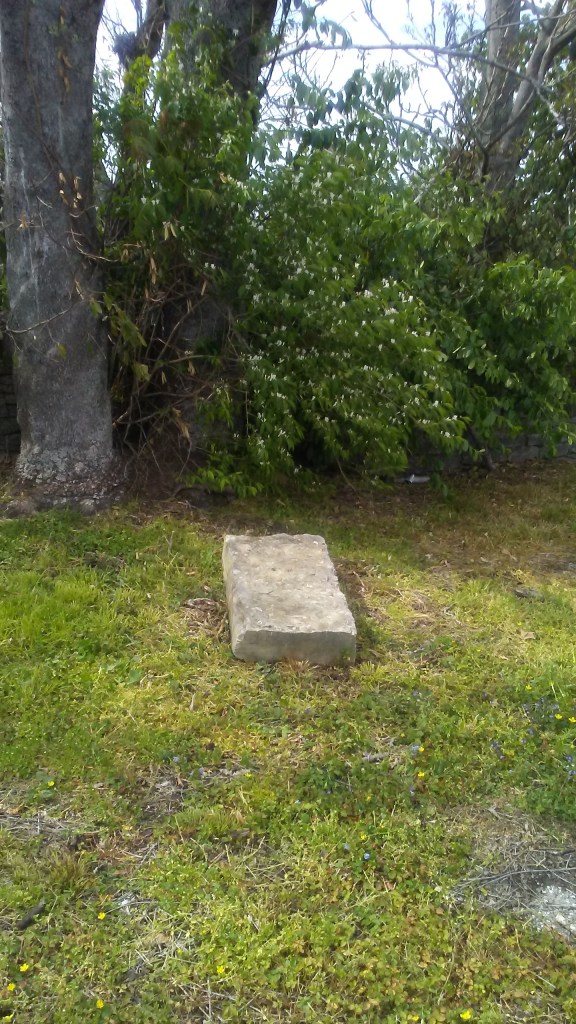
With another attempt to locate the grave sites of horses besides Bull Dog, I found what appeared to be another grave stone. If it was, it was inscription-side down, and yet still confirmed what I had begun to suspect, given that Bull Dog’s gravestone was no longer where a website I had consulted mentioned it as being, and also since it had been moved, it was likely the other gravestones had too.

It is too difficult to identify if this stone I found is that of Rose Leaves, Etoile Filante, or Reaping Reward, yet it seems likely it is one of those. While it has not been left standing in a place of honor like Bull Dog’s, it still reclines in a peaceful site beneath a tree that had honeysuckle flowers growing alongside and stretching down towards the gravestone.

One other interesting note about this property, as its historic reign continued in the racing world, part of Coldstream Stud later became Maine Chance Farm. Part of the property retains that name, with another part being a research farm, both part of the University of Kentucky’s holdings, along with the nearby Coldstream property. As one who appreciates racing history deeply, it always stood out to me that there was a significance to getting to be on the Maine Chance property to take classes while enrolled in the University of Kentucky’s Equine Science and Management degree, with their resident horse herd, and later to work on the research farm and go past that part of the property on the way to work.

One of the barns on the Maine Chance property was one I could envision just as it would have been when Elizabeth Arden Graham’s horses resided there. The university still raises Thoroughbreds on-site, with the foals being handled by students through their yearling year to learn everything about raising a young horse and sales prep. It also stood out that where a training track had once been left a path evident near the entrance, traces of what once had been, much as Carnahan House, Aristides’ birthplace, and Bull Dog’s gravestone have their own stories to tell of the enduring significance this land gave rise to in the racing industry.


References:
http://www.gardenstogables.com/the-uncertain-fate-of-carnahan-house-at-coldstream-farm/


https://www.paulickreport.com/news/ray-s-paddock/kentucky-farm-time-capsule-maine-chance-farm/


https://explorekyhistory.ky.gov/items/show/319


http://www.americanclassicpedigrees.com/bull-dog-fr.html

Remembering Monarchos

03 Sunday May 2020

Posted by Sarah Troxell in Uncategorized

≈ Leave a comment

It felt odd, like for many who love racing, to see this day dawn knowing it was not synonymous with Derby Day. Even knowing in advance it was going to be that way, ever since the horse racing bug bit me, meant it was hard to shake that notion. It was strange indeed to go to sleep the evening before and know that it would be another day, no early trip to Louisville in the cards to witness another day of the pageantry, anticipation, and excitement unfold. However, hopefully that will happen in September, with enthusiasts in attendance.

Since there would be no Derby Day this year on the first Saturday in May, I had turned to Steve Haskin’s book, Tales of the Triple Crown, reading the chapter on Monarchos before calling it a night, and then finding a different book to focus on something besides wistfulness at missing the Derby.

The chapter on Monarchos brought a lot of memories flooding back, and even with as many Derby winners as I’ve seen who used that victory as a springboard to even greater things in the overall trajectory of their careers, it hit me for the first time that Monarchos may well be the winner I identify with most strongly for sentimental reasons, and a large part of that is some of his story is intertwined with family memories. That means even more when one has lived away from family for years.

Besides the memories associated with family regarding Monarchos, there were two other aspects that drove that strong resonance of his Derby win and his life in the years to come. One was pedigree. Studying pedigrees has fascinated me since I was quite young, as a child watching racing on TV and taking notes about what broadcasters mentioned about horses’ sires and dams, and spreading from there to dive into lineages and how they could lead to excellence, whether it was one top horse from a particular sire and dam or a long string of notable descendants from a family branch.

Where pedigree strongly tied in with Monarchos was from the presence in his family line of Majestic Prince in the fourth generation. Though he won the Derby ten years before I was born, photos of him sparked my imagination and drew me to him in a way that words cannot explain. It was enough that he seemed like an epitome of what a top Thoroughbred should be. That one little link, tenuous as it was based only on photographs, meant Maria’s Mon was a horse I followed avidly during his race career, and when his son Monarchos showed promise, I was all in on him for the Derby.

I was still living in Tennessee, so I had no access to betting other than online but I believed in Monarchos so strongly I set up an online wagering account to bet on him to win the Derby. (Side note: betting does not have a big pull for me, so to set up that account and only ever use it to bet Monarchos was significant). Even that little memory is tied to family, as I was sitting in my grandmother’s home and placed the bet through her computer. Funny thing is, I had no idea how to withdraw the money from the online account when he did win but it didn’t matter. I was elated he got the victory and it was a special memory that the first time I ever bet the Derby, the horse I chose won. I didn’t ever bother to figure out how to withdraw the winnings, because what mattered was he won, but I did make sure to buy a large photo of him at the wire in the Derby.

While Monarchos did not repeat his Derby success (having sustained an injury, the Haskin book reminded me, that likely compromised his chances at winning again going forward and then led to his retirement not long after the Derby), he always meant a lot to me for fulfilling the promise of his family line, going back to a horse I wasn’t even alive to witness and adding another Derby triumph to that male line.

When I visited Kentucky for the first time the year after the gray colt’s Derby win, I went to as many horse farms as I could. Claiborne was tops on the list, to pay tribute to Secretariat with a rose for his gravesite on my mom’s behalf, as he had been her favorite horse, and to see Monarchos.

I got a photo with him, his coat still the dark gray of a young horse and still not looking like he was far removed from being in racing trim, even as he had nearly completed his first year at stud.

The following year, I moved to Kentucky, spurred by the visits to all the farms and how it felt like where I should be. That is where a second family memory, besides how strongly I remember being in in my grandmother’s house betting Monarchos (with the associated sense of what she means in my life, from being there in her home), came into effect. My mom came to visit and I made one farm appointment for her visit. I felt she needed to go to Claiborne herself, to see where Secretariat had lived and now lay at rest, and I also wanted her to meet Monarchos. I got a photo of her with him to add to the one of me with him the previous year. That is the only time my mom has been to any horse farms here, and the only famed horse I have a photo of her with.

Since I was in Kentucky every year of Monarchos’ retirement, and lived here for all but one, there were more opportunities to build memories with him.

I had two more moments in his presence before he passed, after the earliest days of his retirement.

One was when he moved from Claiborne, and I happened to be with a friend who took a detour by the farm where he resided, and sure enough we saw him grazing in a paddock. It stood out to just happen to drive by and see him there, for even in a place with a multitude of Derby winners, to see them grazing from the road is not common. And of course I loved that the winner was Monarchos. I don’t even think that friend realized his significance to me when she went by to try to spot him. Was purely serendipity, feeling even more special for that aspect.

In 2013, I connected with a group of people who came from multiple states to look at putting together a partnership for a racehorse, starting from scratch with breeding a mare to the stallion they were avid fans of. Since I had admired this stallion too as a racehorse, the idea was appealing to me and I joined in their activities that weekend. While the group ultimately was revealed not to be one I wanted to join in the partnership with, I will never forget the weekend they came to Lexington and all I got to be part of by considering joining their group. They had garnered some degree of national attention for how they followed the stallion they wanted to have the foal from, and this opened doors to experiences I likely would not have had otherwise. They knew about aspects of these horses I didn’t, and one of the people in the group happened to know that Monarchos’ groom was willing to have his charge “autograph” the book about him, Horse of a Different Color.

With a recommendation of an independent bookseller that sold the book, I went to be sure I had my copy in hand the day we visited Monarchos.

It was the longest amount of time I had spent in his presence, and it stood out what a rapport he shared with his groom, and how he had a patient mellow temperament as everyone in the group lined up to have their books “autographed” and get photos with him.

I had no idea what it meant to have a horse autograph a book. I never would have known of such a thing if this group didn’t happen to know about it.

When we all gathered that morning to see Monarchos, we opened the book to the first page, before the title page, and the groom had Monarchos stand on them long enough to leave a firm hoof imprint. In return, the group brought him a case of Guinness, I think. Some type of beer that was his favorite to thank him for doing that for all of us.

It shone how much Monarchos mattered to him, and how glad he was to share him with us.

While I was looking for the book I wanted to read to think of things besides missing the Derby on its usual day, that is when I came across this book Monarchos autographed, and also discovered a sizable amount of either his mane or tail hair, don’t recall which, that the groom had given us. It was a poignant and touching find, for I did not recall we had also been given some of Monarchos’ hair, and I treasure that link to the first Derby winner I ever bet on and that I was lucky enough to have such moments with and to receive that gift from on behalf of his groom.

After the autographs, Monarchos was turned out to his pasture and the group gathered to watch him romp and roll in the mud. Naturally, given his age, his coat had lightened tremendously and the careful grooming job was obscured in no time. Even that was enjoyable, though, to see him being a horse, enjoying free time, and his groom was content to stand and watch with us, further revealing what this horse meant to him on a personal level.

That is the beauty of racing and the horses we get introduced to through it, even from a distance in living rooms as we watch them run on TV in states that have no racing or places to bet, and then we get to know who they are and find that comes to matter even more than money bet or accolades earned. It is the personal connection, and in Monarchos’ case that he is one of the few horses I have shared with family members.

So while there are Derby winners who went on to achieve more than Monarchos did, the sum of what he meant as an individual cannot be quantified by that alone. Today he was the first Derby winner that came to mind as this day began, and for that I now realize he likely will always be the most significant from the standpoint of grabbing my imagination like Majestic Prince did and having that luster always remain.

Honoring the Queen of Denali

12 Sunday Apr 2020

Posted by Sarah Troxell in Uncategorized

≈ Leave a comment

Serena’s Song turned 28 April 4, her true age matching her official birth date. Yet in most other ways one would expect age to catch up to a horse, it largely hasn’t with her.

It was a treat to see about half an hour devoted to a celebration of her through a video made by Denali Stud, where the star mare was given as many peppermints as she wanted, and a few nibbles of a cake made by Sarah Fishback, which spelled out “Serena” in carrots and had numerical candles for her age nestled into the oats. The care that went into making the cake, and the people that gathered to celebrate her in the video, was emblematic of how she means the world to Denali.

Craig and Conrad Bandoroff largely narrated, in turn, walking viewers through Serena’s storied life. They mentioned her first race, restricted to maidens, and while she didn’t win it, they said she must have been in high esteem at her barn since she was in stakes company in her second start, and broke her maiden in her third try.

“She did what horses don’t do, with 38 starts, 11 Grade 1’s, and beat the boys on several occasions.”
Conrad Bandoroff described her running in the Breeders’ Cup Juvenile Fillies against champion Flanders, and how she was barely beaten, and that it reminded him of Alydar and Affirmed.

He went on to say that she had been a front runner in the Derby, and led for over a mile, before going on to win the Haskell against colts.

They joked that D. Wayne Lukas could be thanked for her loving peppermints, to such an extent that it is good horses can’t colic on the candy!

Conrad Bandoroff also said he had a friendship with Mr. and Mrs. Lewis that evolved into a business relationship, and when Serena’s Song retired the Lewises decided to send her to Denali. Bandoroff told them he could keep her in a small pasture “like an animal in a zoo” or let her be a horse, in a pasture with buddies, and the Lewises were adamant they let her be a horse. She arrived at Denali on December 9th, 1996, and Bandoroff remembered looking at her legs when she arrived and you’d have thought she’d never run a race, let alone 38. She was the leading money earner for distaffers when she retired.

He also said, while Serena had to be good to have the foals she had, there were still decisions to be made about stallions she was sent to, and her broodmare career was right up there with what he is most proud of professionally.

“She is the definition of a blue hen mare, with 6 stakes winners. She helped us grow, with 6 seven figure plus offspring, and we are indebted to her in many ways. She is responsible for a lot of the infrastructure at Denali.”

She was also incredibly special to Craig Bandoroff, who came up with the tagline “Queen of Denali Stud.” The Bandoroffs, father and son, joked that there was probably not a horse in Kentucky who had more halters made, and every year they donate 5 or 6 to make money for charities. Given their admiration for her, it is also wonderful to see all her fans want to visit and how admired she is by multitudes of people. As her stewards, they enjoy sharing her with people who want to visit.

I feel blessed to have visited her several times myself. The first time stood out because until then I didn’t realize they even welcomed visitors, expecting mares to be off-limits due to broodmare duties as most (understandably) are. And hearing from the feature celebrating this birthday that she is considered the Queen of Denali, fittingly, it meshed precisely with a sense she had of her own greatness and how I truly got a sense of being in the presence of royalty. I was that much in awe at meeting her. I am grateful to Denali for being so accommodating over the years to all who admire her, and sharing this celebration of her during a time when visits have to be on hiatus.

I did laugh a little that they mentioned she is still quite stubborn and feisty, which was evident during the video, and that none of her daughters are. But if Serena was not stubborn and feisty who knows if she would have been as tough on the track as she was? I admire that certainty of self, that assuredness and sense of who they are, and Rachel showed it too when she refused to yield in the Haskell. It is inspiring.

Conrad Bandoroff said she is currently doing really well, and has special shoes for her comfort. She spends most of her time outside with her buddies, coming in to be groomed and in cases of inclement weather. She did look incredible, and it was wonderful to see her, and hear the memories of those who have known her best over the years, and how they sent my own memories cascading of her prowess on the track, how I loved watching her run, and even better getting to be acquainted with her myself.

I also love that her legacy not only lives now, in how grand she looks and how she is celebrated by all who want to visit her, but also will be for generations to come, through her daughters and their progeny, and all the promise inherent in Honor Code and his progeny carrying on the line with the distinction worthy of his illustrious granddam.

A toast to the wonderful Serena’s Song!

Hope

03 Friday Apr 2020

Posted by Sarah Troxell in Uncategorized

≈ Leave a comment

Today would have been the opening day of Keeneland’s spring meet, an annual highlight not only in Lexington but throughout the racing world.

It also became one of the race meets that had to give way to a new reality, and Keeneland has always been concerned about the community they operate in, giving back in every way possible, and this mission was highlighted again in them canceling the meet entirely, citing that even after considering every safeguard that could be taken, they could not guarantee the horses’ grooms would be able to stay healthy even with limited attendance and no spectators, had racing been held.

I recently learned that, while many places have had to close their doors as Keeneland has shuttered the meet that would have begun today, to my surprise the Horse Park is still allowing visitors free of charge provided they do not attempt to feed the horses and maintain a safe distance from other people on the grounds.

It sounded like a perfect way to mark what would have been a day to revel in the racing tradition if this had been a year like any other.

It still seems surreal at times to see businesses dark as I drive to and from work, to see traffic so light, and so it was to see many more stalls than usual empty at the Horse Park and the grounds nearly empty and silent.

But one thing that has come forth from all of this, is hearing bird songs, seeing the sun rise and set, the trees and flowers erupt in spring beauty and it sends the heart soaring.

This is not to make light of what is happening around the world, of the suffering or sorrow this pandemic has brought to many lives.

But there is still hope and joy to be found, and it is to be found in the places where we can remain safe and still enjoy the beauty of this world.

The Horse Park was a perfect place to visit to find all those things, and to also reflect on what horses can mean to people.

When there is uncertainty in the world, we still can step outside, where the air is clear and worry will not intrude if we focus on what is around. In fact, appreciation for this and finding a place where there is a chance not to be concerned about such things seemed to heighten my focus.

I seemed to see the statue of Secretariat near the Horse Park’s visitor center as though it were the first time. I noticed the fire in his stance, his open mouth, every line captured and showing a grand horse, the epitome of racing fit, and even the chain that was clipped to his bridle seemed as real as if it were not cast in bronze but was in fact the true object. And it was even more fitting to pause and appreciate how his essence was fully captured in that statue, for a few days ago it was the fiftieth anniversary of his foaling.

Walking on to what I had planned to be my first stop before Secretariat’s statue caught my eye freshly, was Cigar’s resting place. I even saw the link between him and Secretariat, for the latter was the horse of my mom’s lifetime, one that another could never compare to, and Cigar fills the same role for me.

As I reflected on what Cigar had meant to me (and that he would have reached his thirtieth birthday on April 18), and caught the sweet scent of the white flowers that flanked the small statue that was also him through-and-through, I was filled with joy at the thought of him. It rose in me unexpectedly and I was glad to feel it.

Once it had been hard to stand near that pasture, knowing I would never again see the bay horse with the unique blaze, but what matters, now that time has ebbed away grief, is that he lived and I was fortunate to get to be in his presence. And that is where the joy came from, and what a grand legacy to leave.

Nearby, Funny Cide and Point Given grazed, in side by side pastures. I took a few moments to watch them both. Simple pleasures again. The peace of bird song. The calm and stillness of being in the presence of horses. The appreciation for Point Given that rippled through me as I reflected on his racing career.

I paused again by Secretariat’s statue on the way out to read the inscriptions on the stones all around it. It is moving to read what these horses meant to people. They do give us hope and joy and peace that stays with us, as well as thrills from their racing days. And sometimes thrills of a different kind, like getting to know them one-on-one.

While we are adjusting to a new normal, the rhythm of the days and seasons are the same and nature is a peaceful respite. It was not the day it would have been with top horses racing for glory at the showcase that is Keeneland, but it was still good. And that is what I seek now, to mind the guidelines for staying well and find the peace in the midst of uncertainty. It is there to find for those who know where to look, and I am grateful the Horse Park is such a place.

Empire Maker: Destined

24 Friday Jan 2020

Posted by Sarah Troxell in Uncategorized

≈ Leave a comment

When as a horse as influential as Empire Maker passes suddenly, as he did at the age of 20 on January 18, it is natural to reflect on all he achieved and to wonder what may have been. It is natural to feel shock and grief, to feel perhaps he was gone too soon even at 20, particularly since it had not been long since he was returned to the U.S. for sire duties.

Yet I think our time is preordained and nothing will intervene to alter that when we are meant to go. This does not mean I don’t feel the loss.

When I first moved to Kentucky, it was to follow a dream horses just like that can ignite in people. And he was so royally bred, I thought if any horse deserved to win one of the three-year-old classics in the history of those races, it was him. So I was elated when he prevailed on a rainy day at Belmont Park, the denial of the popular blue-collar horse Funny Cide’s Triple Crown notwithstanding. I had nothing against Funny Cide but that certainty Empire Maker belonged among the elite winners of a Triple Crown race was that strong. I had only lived in Kentucky for a few months by the time he won the Belmont in 2003, but when he retired to Juddmonte, I made sure to go see him. It was visiting the horse farms the year before I moved there and getting to see all these horses in the flesh that I had only watched on TV that sold me on moving, as well as the desire to be professionally involved.

I also had another reason for being an ardent follower of Empire Maker. It was about pedigree, too, as was my thought that he deserved to win at least one Triple Crown race. His sire Unbridled was the first Derby winner I remember, watching on TV in Tennessee, which was the closest I could get to horse racing in that state.

Then I began tracking Empire Maker’s progeny. I went to Keeneland specifically to see one of his first runners myself. I didn’t want to waste any opportunities to visit these horses or see their progeny race now that I lived in a state where that was possible. And he had so many good runners, they sprung to the top of the list of favorite horses in years they raced. Mushka. Acoma. In Lingerie. Pioneerof the Nile. I was so devoted a follower of his progeny, and Mushka had particularly captivated me, that I remember standing at the rail of the paddock at Keeneland one day ankle deep in pooled rain water to see her before she made her way to the track. Like I said, I didn’t want to miss an opportunity now that I lived where it was easier than ever to see these horses.

I was a little shocked Empire Maker was sold to Japan, especially since he had been such a product of Juddmonte breeding, and did feel it was premature. When Royal Delta burst through to such prominence, that notion was reinforced. However, I read a Thoroughbred Daily News article since his passing that indicates he was likely not a good match for Juddmonte’s primarily turf-oriented mares. The decision is not my concern and I will never castigate an owner for sending his horse overseas because no matter how much I admire and feel a connection to a particular horse, I don’t lose sight as I have seen can be the case that a connection does not equal a say in how he is managed. It seems to go without saying that is not realistic, but there are many who seem to have difficulty grasping that.

Because I love the Unbridled line as I do, Pioneerof the Nile was my Derby pick in his year and I was elated to see him take the lead, though it was only that briefly, for the short amount of time it took to run by my section of the grandstand.

Naturally, it was incredible not only to finally see a Triple Crown winner in my lifetime in 2015, but that he descended from Empire Maker, living up even more to the billing in his stud advertisements when he was at Juddmonte, which his own progeny had also proved: Destined.

If ever a horse was destined, it was he. To be a great runner. A great sire. A top-notch grandsire.

And it is exciting to see the success he has had with his first U.S. crop since returning from Japan, and to see how not only Pioneerof the Nile achieved excellent results as a sire, but also that his grandson American Pharoah has been off to a rousing start.

I will follow these new U.S. crops of his just as avidly as I did the first, and I am on board all the way with Eight Rings, having placed my first Derby future wager on him and on one of Pharoah’s sons, just as I made sure to place a bet on Empire Maker when he was entered in the Derby, though it was a long wait in a drivethrough betting line at Keeneland. It mattered. Not for potential money won, but almost to register my strong belief in him in an official sense.

Yes, it sad that he is gone. But what a gift it was he came back and that he had time to produce additional crops in this country and that the first one is already proving he has not lost a step as an influential sire. I do believe it was his time and thinking of him with gratitude for all he gave to the sport and the breed is to honor him best.

I think of this too because I just lost my feline companion of thirteen years the day after Empire Maker’s passing. He let me know it was his time and as hard as it is to adjust to life without him, echoing what everyone at Gainesway has said about Empire Maker, the gift was his presence and he had the time he was meant to have. And what a blessing it is to know these animals who touch our lives so profoundly that in equal measure we feel gratitude for who they were and sorrow that they could not stay with us longer.

I will never forget how amazing it was to see Empire Maker again at Gainesway, all those years later. It was like the first time and left a strong indelible impression. He exuded class and that impression has stayed with me. I last saw him a few months ago in November, and I especially treasure the day that I saw him, Pioneerof the Nile, and American Pharoah all in the same month during open houses and got a photo with them all. Now that two of those three are gone, that means even more. I am certain, as Chris McGrath eulogized in the aforementioned TDN article that Empire Maker has assured his legacy and name will live on in pedigrees and memories and even though I was in his presence only a few times those impressions will stay with me too. Even in a region full of top-notch stallions, his class and demeanor seemed to put him in a rare realm.

Source:

McGrath, Chris. “An Empire That Will Survive Its Maker’s Loss.” Thoroughbred Daily News, January 20, 2020.

A Morning with Beholder

23 Friday Aug 2019

Posted by Sarah Troxell in Uncategorized

≈ Leave a comment

On an early morning in late October, champion mare Beholder and her trainer Richard Mandella stood quietly in a saddling stall in the serene hush of Keeneland. Only a small group of onlookers were on hand as she schooled prior to her anticipated attempt at the 2015 Breeders’ Cup Classic. Mandella stood with her as her rider moved her from stall to stall, turning to the media present to say with a smile that he didn’t know which stall she’d start from so he was having her stand in all of them. His bond with Beholder was evident, and it felt like a privilege to witness. This is one reason mornings at the track can be so special. Details like that which get lost in the busy spectacle of the racing hours are easy to take in and absorb.

While Beholder did not start in the Classic, that moment lingered in my memory as a taste of what the first Breeders’ Cup at Keeneland still made it possible to see, especially before American Pharoah arrived and the crowds in the morning grew exponentially. It was also my most enduring memory of her until the morning Spendthrift hosted a chance to meet her in retirement four years after that day at Keeneland, which also marked my first opportunity to get to know her temperament and interact with her.

It was a serene drive in the early morning, down Iron Works Pike where trees formed a green tunnel overhead, echoed along the drive to the farm office once through the Spendthrift Farm gates. It did seem reminiscent, too, of that quiet morning when she schooled at Keeneland.

The visit began in the grand farm office, a former home, which now hosts offices and displays racing trophies, as most farm offices do, as well as Beholder’s framed Pacific Classic saddle cloth. “It’s clean because she was in front the whole way,” Autry Graham, Spendthrift’s assistant marketing director who led the tour that day, said. Indeed she was, in an 8 ½ length romp that left no doubt who the best horse in the race was that day, and also indicated overall how good she is.

Beholder today lives in the broodmare barn, stabled across from the gray mare Coup de Coeur, who she is closely bonded to among the field of six or so other mares they are turned out with.

Before Beholder was turned out for the day, I got to feed her carrots. The v-shaped bars in the front of her stall were removed and she immediately came over and put her head through. She has a presence and a look in her eye, the look of a great horse,that made me pause for a moment and just soak that in and then start feeding her carrots.

She has such a laid-back personality, which seemed evident as I saw her school several years ago, that 30 people were present the first time she foaled—a farm manager, an assistant farm manager, a broodmare manager, and so on, and many of them even brought their kids—and it never fazed Beholder at all. Whatever her first foal may become (and he has already shown a tendency to be feisty, which could bode well for a competitive fire on the racetrack, noted by Graham), I think those kids may have quite a story to tell someday of seeing the great mare’s first foal come into the world.

After a few carrots, Coup de Coeur was led out of her stall and hesitated on the pavement, reluctant to go on without Beholder in sight. And then Beholder was brought out. She is captivating to see. She carries herself like she knows she is a multiple champion. Yet many have seen that the greats know they have that “something” that sets them apart. It does show in their eyes too, and that may be what captivated me the most. The sun highlighted the dapples in her coat, making her look even more dazzling. She couldn’t have a more fitting name. It is said beauty is in the eye of the beholder, but she may be one of the loveliest horses I have seen and it is hard to imagine it is just because I am the beholder and that most wouldn’t concur.

She tried to make a beeline for the grass, much more intent upon it than Coup de Coeur was. “She is all about her grass!” Graham laughed.

When turned out in the pasture, she and Coup de Coeur grazed head to head, their bond evident, before wandering off to join the other mares in about the center of the pasture.

Gas Station Sushi was also in the pasture and entertained a notion of coming up to the fence for some of the carrots that remained. While she didn’t come up for interaction, her coming closer offered the chance to get a few photos of her. I remembered her from racing at Keeneland and all the attention she garnered for her name, but had never had a good look at her until then to realize how photogenic she is.

On the visit, Beholder was described as a dream as a broodmare so far, getting in foal on one cover each of the three times she’s been bred, and foaling twice so far quite close to her actual due date and at easier times of the day to attend than the middle of the night or wee hours of the morning. Spendthrift also tends to support the stallions they stand to a large extent with the mares that reside on the farm, so Beholder’s foals have represented some of the only ones they have by the stallions she has been bred to. “I’m curious to see what her War Front (appearing to be a filly, due in February next year) looks like because we don’t have any of those. So far, her foals have looked like her in the head and had the body type of their sires,” Graham said.

Richard Mandella and Gary Stevens have paid visits to Beholder in retirement too. Richard Mandella doesn’t come that often because it is emotional for him. “One time he came to visit, and Beholder was out eating grass. She wouldn’t even look up and he was a bit disappointed. Then he pulled a peppermint from his pocket and that was the key to getting her to leave her grass! She even somewhat weans her foals by herself because they get in the way of her grass eating!” Graham said.

This visit was all Horse Country aspired to provide in the way of experiences when they were launched, getting to meet the stars once followed on the track, as well as telling the story of the land and enhancing visitors’ connections to the farm and horses.

To the end of further providing experiences that resonate like the Beholder meeting, Spendthrift is going to open up their onsite training track to visits starting at 5:30 in the morning next spring, and also the breeding shed for a morning’s session, since most farms are not doing that.

They also are looking into options for aftercare, with 8 retired mares currently living on the farm. It brings to mind how Mill Ridge Farm offered a very extensive tour of the property, visiting multiple areas, including interacting with the older mares retired from broodmare duties, which Stonestreet also does on one of their tours. If those older mares are one day part of the group that can be visited, that would be quite memorable too, and for those horses they have ownership in that may still be suited to other careers, they are considering whether New Vocations will be the route they want to take for placement for them.

It is gratifying to see the success Horse Country has become, and how it does allow these farms to expand their tours and provide even greater access to visitors, as Spendthrift plans to do with training and breeding shed tours, success that has also seen WinStar add tours of their mare and foal division and Claiborne do the same, areas that had rarely been open to visitors. I also applaud the farms for making the commitment, while operating their business, to opening the doors regularly and welcoming people. Graham noted that they are fans of the great horses that reside on the farm too, and no doubt that helps drive the willingness to let others see these horses who captivated them on the track. It always makes for a memorable occasion.

Celebrating Rachel Alexandra, “Haskell Legend”

10 Saturday Aug 2019

Posted by Sarah Troxell in Uncategorized

≈ Leave a comment

Rachel Alexandra, still showcasing the trim athletic figure that had helped power her to an amazing array of victories, stood outside of a barn at Stonestreet to meet a group of eager admirers. On that day in March 2011, the people gathered around the recently retired mare had been selected for the farm’s first “Meet Rachel Day. ” The entree into the gates at Stonestreet was a marvelous harbinger of the hospitality and graciousness that was to be a hallmark in years to come. As promised in the first announcement of the “Meet Rachel Day” events, the farm’s illustrious star would be available to meet other admirers around her broodmare duties. While she is breeding sound, there have not been broodmare duties for several years, and the rhythm of her life has only changed in that she has no foal at foot and is pastured with several older pensioned mares for companionship, but she still lives in a foaling barn in a roomy stall.

During that first “Meet Rachel Day,” it was evident the chosen attendees were awed to be in her presence, and grateful to get time to know the mare one-on-one and have pictures taken with her. While the racehorse she had been was evident, at that time she had recently been bred to Curlin and was carrying the colt that would be named Jess’s Dream. There was a sense of reverence among some people there that day that even led stroking her soft stomach, and I for one thought of the little life just beginning. It was amazing to have those moments with her, for she is the horse of a lifetime for many beyond the environs of Stonestreet as well.

March 2011
March 2011
March 2011
March 2011


One of the incredible victories that she still appeared to be in racing condition from eight years ago was the Haskell Invitational in 2009, her second victory against male horses.

As Rachel Alexandra stepped forward into her position in the starting gate that August day, the track announcer said, “The Preakness winning filly is in the gate and there’s one left to load,” indicating even running against the likes of Summer Bird and Munnings in the seven horse field, she was the one likely gathering the most attention, also reflected in her low odds as the field went off.

When the gates sprung open, Munnings rocketed to the lead, with Rachel Alexandra quick to rush up into contention to sit off of his flank, while Summer Bird moved up equally rapidly to take a position on the rail off of Munnings’ other side. 

As those two classic winners flanked Munnings, they ran on even terms by the quarter pole, dark bay head on the outside mirrored by the chestnut head on the rail, in a race all their own even as they chased the pacesetter. Summer Bird began to edge ahead of Rachel Alexandra, breathing down Munnings’ neck while Rachel still kept her position off of that leader’s flank. 

Munnings appeared to be striving with all he had, pushing forward determinedly but it would not be enough. Rachel Alexandra unleashed her move past the ¾ pole and swept to the lead with an effortless surge of power. She left Summer Bird, who had looked full of run and with every chance at victory before she took over, to have to settle for second place.

It was a sublime effort, and thrilling. The track announcer burst in that she turned “for home with a four length lead” and the crowd roared at this display of superiority, unable to contain how it felt to witness such a tour-de-force. 

He got it exactly right when he finished his race call with all the excitement swirling through the crowd and around Rachel Alexandra, who would not let herself be bested throughout her entire 2009 season, no matter what track she went to or what competition she faced.

“Here’s a filly for the ages, a Haskell legend….. Rachel Alexandra did it!”

She did indeed, and that was a wonderful occasion to celebrate as Stonestreet opened its gates once more July 20 for a Haskell Watch Party to commemorate her emphatic six-length victory that day, and how she rocketed to a four-length lead in almost no time at all.

The occasion was also a fundraiser for the Grayson-Jockey Club Research Foundation, with attendance capped at 50 people. It was wonderful to be among so many people united by a common admiration of and fondness for Rachel Alexandra. One attendee came from Michigan, and thought when Rachel nearly was lost due to foaling complications several years ago, that she had lost her chance to see her. She reiterated, during the wait for the bus that transported us from Keeneland to Stonestreet (due to limited parking at the farm), how much these things matter, to see these great horses that touch our lives and “speak” to us deeper than any words ever can. I understood perfectly. I love to watch my favorite horses race, but it is wonderful to get one-on-one time with them too, to truly get a sense of who they are as individuals and their temperament and characteristics.

Every party-goer aboard the bus, it meandered through the Keeneland gates, down Rice Road, and past the lovely barns of Fares Farm, where curious broodmares along the fence line nearest the road turned their heads to watch us pass. It is lovely to go down the roads in this region lined by farms and away from the urban sprawl. There is a serenity in seeing fields of corn growing tall, rather than parking lots and shopping centers, a happiness in seeing sleek mares turn to watch us pass—understood best by those that are fulfilled by a life that includes horses–and a joy in seeing a group of weanlings sprint across a pasture, full of wild young exuberance.

Alighting from the bus at Stonestreet, we were ushered inside one of the beautifully crafted barns. All the horses from that barn but Rachel Alexandra were out in the paddocks.

The party was originally going to involve watching the current year’s Haskell, but when excessive heat necessitated it being pushed back several hours later than its originally scheduled post time, the TVs on site played a loop of Rachel Alexandra’s races instead. It was a chance to pause once more and relive her greatness in races I had not often watched since they occurred, while snacking on hor d’oeuvres and chatting about the mare with other attendees. The other plus of the Haskell start time being pushed back—besides the benefits to its entrants—was now those at Stonestreet would have more time to spend with Rachel Alexandra.

The hospitality, as expected, was incredible and is well worth a description. Stonestreet staff greeted everyone warmly as they filed off of the bus, directing us into the cool of the barn. Paper fans were passed out with the names of the 2019 Haskell entrants printed on them, and a variety of Kendall-Jackson wines as well non-alcoholic beverages were on offer, and so were trays of hot browns, and a buffet set up of fruit, cheese, crackers, and mixed nuts, and later chocolate cake. 

The buffet at the Haskell celebration
A table set for the Haskell celebration, with a Stonestreet paddock in the background

Small groups were chosen to greet Rachel outside of the barn, to keep it manageable for her, but she never minded all the people, taking a very relaxed stance as she was led under the shade of trees. She looked magnificient and filled out, and still every bit the powerhouse she had been on the track, the muscles of her frame evident even after beginning her retirement near the end of 2010.

I was chosen with several others to be in the first group to greet her, getting my first opportunity to have a meeting with her other than in her stall or from a field as she was part of the Horse Country tours to Stonestreet but whether she interacted with people then was on at her whim. Not that it made it any less wonderful to see her, but this day was extra special.

Rachel’s dark coat gleamed as she stepped from the barn into the sunshine before being stopped in the shade and people singly or in pairs stepped forward to greet her and get photos with her.

imageedit_1_9181855235

I was content to stand back for a while and observe her, soak in her presence. She is my favorite living racehorse, after all. 

imageedit_3_2602781277imageedit_5_5350648298imageedit_7_3544825151

Even when the first group’s turn was over, people gathered at the barn door to watch her. She is deservedly every bit the draw she was when she pulled away in the Haskell and dominated that field, when she showed all determination in the Woodward that same year, and was unquestionably the Horse of the Year for one of the best campaigns it could be hoped a three-year-old would string together, regardless of gender. For even the races that she ran in restricted to gender were evidence of her superiority, most notably the 20-length romp in the Kentucky Oaks.

Rachel hats and shirts were in evidence throughout, including one that honored her Hall of Fame induction which I had not seen before, available from that Saratoga Springs institution at one time. The guest of honor also received gift bags from a few attendees, likely full of treats for her.

As the party wound down, door prizes were drawn outside of the barn, steps away from a pasture where the next generation of Stonestreet foals grazed with their dams, including Good Magic’s brother.

It was an incredible day, full of wonderful memories and further testament to Barbara Banke’s generosity and hospitality, as mentioned by the Grayson-Jockey Club Research Foundation staff on site  at Stonestreet, who also noted briefly what fundraisers like this one help them do for the horse and some of what has been learned in the process, like about leg injuries in racehorses.

Disembarking at Keeneland, the grounds quiet, immaculate, and as serene as ever, was a good bookend to the day, and worth lingering for as reflections of the day and the peace of the surroundings flowed through my mind.

Legacy of a Pioneer

22 Friday Mar 2019

Posted by Sarah Troxell in Uncategorized

≈ Leave a comment

Summer day

Light and carefree

Made our way down to the last stall

On the left


Near black horse

First ignored us

Looking out the window


Then stuck his head through the opening

At the front of his stall

Lured by the rustle of plastic containing a peppermint


He was kind, mellow

That impression lingers

As does the tour guide saying

his most famous son

got that similar temperament

as a birthright


That was the last time I saw him in this life


After following him on the Derby trail

Cheering him wildly as he briefly attained a lead

For only the short time he ran by our section

at Churchill Downs,

as the field rocketed out of the final turn

and headed down the homestretch


He retired, went to Vinery the first time I saw him up close

It lingers in my mind how he was in trim racing form still

The athlete’s shape evident in every line,

indicating what a top notch runner he had been


He, like many newly retired colts, was a bit antsy

dancing lightly on the end of the lead rope

rather than standing still

And I drank him in with my gaze


Never gets old to see the horses you followed from a distance

up close

once you get that opportunity

Underneath the competitive fire that still burned, the ball of energy within,

it was too soon to reveal that gentle temperament he also had in abundance


That was not a thought then

I was just glad to see him


One more horse from the avidly appreciated Unbridled line

to have his chance at glory through his future progeny


Moved on to WinStar,

where he resided in that final stall

and ate the offered peppermints

the last day I spent in his company


In between those two visits

he cemented his legacy

with a cascade of good runners


and more


the rare feat of becoming a sire of a Triple Crown winner


American Pharoah alone ensures his name will endure


Yet more than any of that


Was the quiet moment in a barn on a lovely late summer day

When he endeared himself to a small group of admirers


That day will linger in my memory the most


For getting to truly know him,


Beyond even the substantial sire statistics and race record, even as important as those are


For one who loves the horse, what matters even more is who they are

that is when they touch your soul

in an elemental way that words are never able to express adequately

but you know will stay with you


He touched people’s lives

That never dies

Even if the physical presence left too soon

and you are saddened


You know he lives on

In a way that can never fade


Mourned

for the last page being turned

Celebrated

for

authoring his place in racing history


For the chance to know him I am forever grateful


Rest in peace, Pioneerof the Nile


You were and are loved


Training at Blackwood Stables

09 Saturday Mar 2019

Posted by Sarah Troxell in Uncategorized

≈ Leave a comment

Blackwood Stables in Versailles, Kentucky, is part of the long tradition of excellence in raising and training Thoroughbreds in the Bluegrass region, with several graduates from the renowned Irish National Stud program, including one of the farm’s two owners, and a 6-furlong training track that was developed by the same team that converted Keeneland’s track back to a dirt surface recently. The track is also accredited, so horses that train there can have published works from their time at Blackwood Stables.

The office overlooking the training track also reflects the tradition they strive to attain, with framed win photos of several top graduates of their program, and horse paintings of past greats or famous scenes, including a 1920 painting by J. Martin of Man o’ War under saddle on a track. Leofric, last year’s Clark Handicap winner, is one of their more recent graduates to achieve graded stakes glory. They also have a horse on the Derby trail currently.

IMG_9458

A painting in the office overlooking the track

The operation primarily takes in client horses, sent by owners, trainers, or vets. None of the horses are under the care of outside trainers during their time at Blackwood, as the entire regimen is managed by the farm staff. Co-owner Matthew Hogan accompanies the racehorses to the track on a pony. The first sets to go out each day are horses that are three and up, since they spend the most time in the barn and are ready for the exercise by the time morning comes around.

IMG_9427IMG_9430

IMG_9377

Warming up before going to the training track

IMG_9392IMG_9407IMG_9439

One of the definite advantages of being a privately owned training facility, instead of being based at a public track, is that adjustments to start times for training can be pushed back later in the morning if needed due to weather, and can go on much later in the day. Typically, in the winter months, they try to start at 8 a.m. and finish by noon, but there is a lot of flexibility to start or finish later when necessary.

They also take in yearlings to break, and horses on layups. There is a high-speed treadmill on site, and plans to expand into more therapeutic features later this year, including a cold water spa.

On the yearling side, a short distance away from the barns where the older horses are stabled near the training track, the younger horses get a lot of turn-out time, with fillies in groups and colts turned out individually. The yearling barn also has resident pig Pickles, adopted from the Lexington Humane Society, and a few miniature horses.

IMG_9465

Young horses enjoying turnout time

IMG_9466

One of the resident mini horses

← Older posts
Newer posts →

Recent Posts

  • A Day to Remember
  • Tempo
  • Caldera, and Derby 2026
  • Serena’s Song: A Singular Life
  • Afleet Alex: An Enduring Presence

Archives

  • May 2026
  • March 2026
  • February 2026
  • June 2025
  • March 2025
  • February 2025
  • November 2024
  • May 2024
  • April 2024
  • February 2024
  • October 2023
  • August 2023
  • April 2023
  • July 2022
  • June 2022
  • May 2022
  • April 2022
  • March 2022
  • January 2022
  • December 2021
  • November 2021
  • October 2021
  • September 2021
  • August 2021
  • July 2021
  • June 2021
  • May 2021
  • April 2021
  • February 2021
  • November 2020
  • October 2020
  • September 2020
  • August 2020
  • May 2020
  • April 2020
  • January 2020
  • August 2019
  • March 2019
  • February 2019
  • January 2019
  • October 2018
  • August 2018
  • July 2018
  • June 2018
  • May 2018
  • March 2018
  • February 2018
  • January 2018
  • December 2017
  • November 2017
  • June 2017
  • May 2017
  • April 2017
  • March 2017
  • February 2017
  • October 2016
  • August 2016
  • March 2016
  • November 2015
  • October 2015
  • September 2015
  • August 2015
  • June 2015
  • May 2015
  • April 2015
  • March 2015
  • January 2015
  • December 2014
  • October 2014
  • August 2014
  • April 2014
  • March 2014
  • February 2014
  • January 2014
  • December 2013
  • October 2013
  • June 2013
  • May 2013
  • April 2013
  • February 2013
  • January 2013
  • December 2012

Categories

  • Uncategorized

Meta

  • Create account
  • Log in
  • Entries feed
  • Comments feed
  • WordPress.com

Blog at WordPress.com.

  • Subscribe Subscribed
    • Called To The Post
    • Already have a WordPress.com account? Log in now.
    • Called To The Post
    • Subscribe Subscribed
    • Sign up
    • Log in
    • Report this content
    • View site in Reader
    • Manage subscriptions
    • Collapse this bar

Loading Comments...